
Success Stories
The bonds formed by these dogs with their new owners are incredible. Their loyalty and enduring companionship provides.
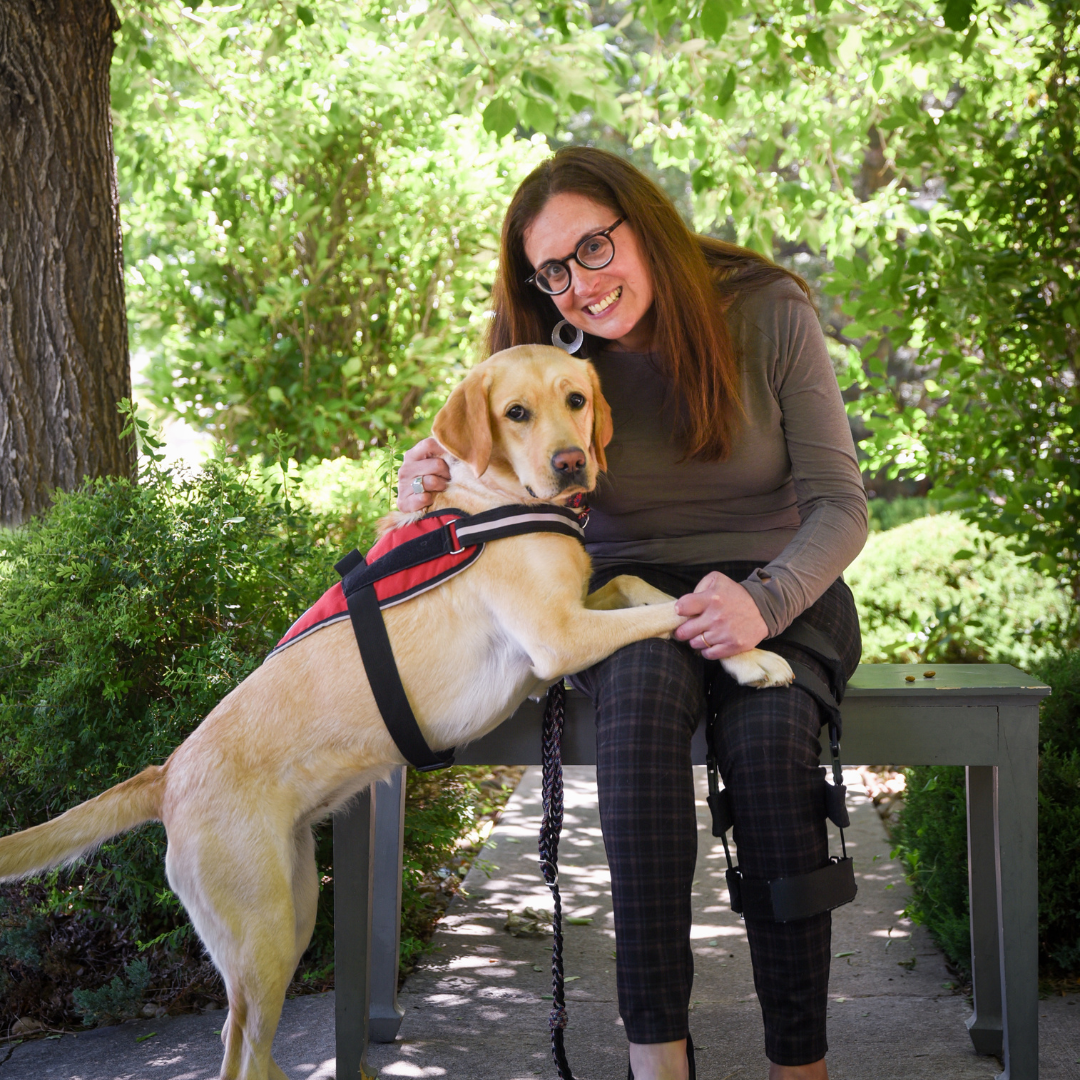
Army Specialist Cameron B. & Harper
Army Specialist Cameron B. graduated with his dog Harper on June 27, 2009. Since returning from a 12-month tour in Iraq in February 2006, he has lived in the Warrior Transition Unit at Fort Carson. He suffers from TBI and PTSD stemming from a series of roadside bombs that erupted next to his vehicle when he was serving in Iraq in 2006. Physical injuries to his back, knees and ankles add to his challenges.
A fourth generation soldier, Cameron refers to Harper as his new “battle buddy.” This time the battle is transitioning into life after the army. “Soldiering is all I’ve ever known,” says Cameron, “I can’t soldier anymore and, like a lot of guys like me, it’s scary leaving the army.” Coming to FSD helps him in ways he never imagined. He’s learning new things. He’s more comfortable leaving the post. He’s gaining confidence in working with civilians.
Cameron describes his relationship with Harper as a “breakthrough in service dogs” because Harper provides as much emotional support as physical support. His PTSD manifested itself in anger and anxiety, causing Cameron to cut off people and sabotage relationships. “Now that I have Harper in my life, I just look at him and he puts a smile on my face. Knowing all the things he can do for me — his non-judgmental companionship.” In terms of everyday tasks, Harper is trained to help Cameron keep track of necessitates such as his keys, cell phone, and wallet; open doors and refrigerators; and perform “crowd control” to prevent anxiety. Cameron describes Harper in glowing terms as a “wonderful tool and companion” and a complete “sponge who loves to work.” Not to mention “a free spirit,” a “lover,” and “so darn good lookin.’”
The bond he will develop with his service dog will go beyond tasks. His dog will be trained to help him keep track of everyday things like his keys, cell phone and wallet….things he misplaces frequently. Beyond that, he knows his dog will be his new battle buddy. “In combat, you can’t go anywhere alone. You don’t go anywhere without your battle buddy. In civilian life, I want my service dog to be my battle buddy. I want the dog to go everywhere I go.”
Cameron also volunteers his time at FSD and this is experience is helping him to transition to civilian life, making him more comfortable leaving the post, teaching him new things, and giving him confidence in working with civilians. “I was in a slump for a while—I was low on friends, I missed deployment, I hated meeting new people,” explains Cameron, “But volunteering as FSD brought me out of my shell. Everyone is professional yet fun, and I’m back doing stuff I used to do before.”
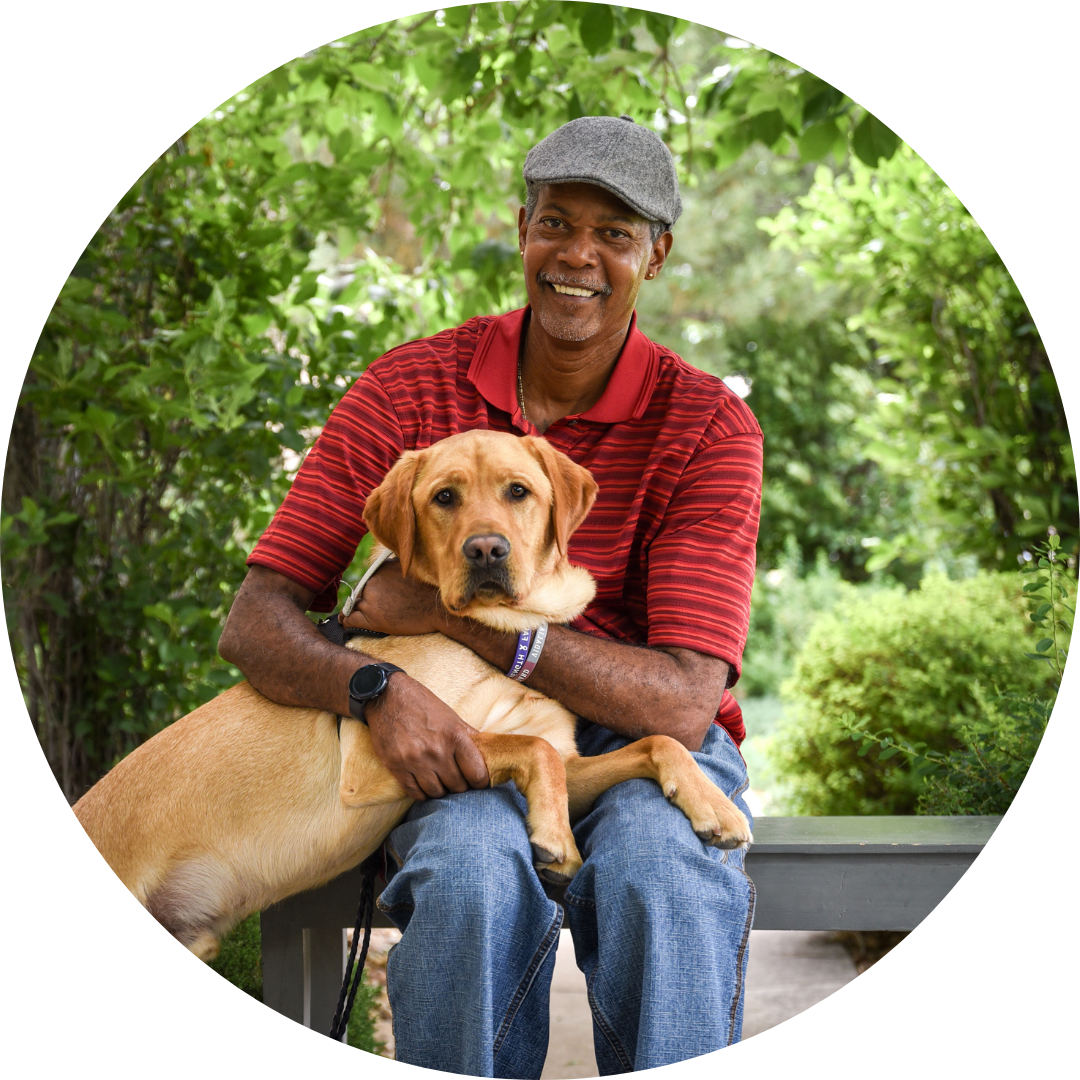
Vietnam Veteran and Veteran’s Advocate, Artie G. & Sierra
Growing up, Artie G. was very patriotic. It was after World War II ended and everybody was patriotic. In 1967, Artie was drafted. He went through 13 weeks of basic training, then 13 weeks of advanced infantry training. Then he was sent to Vietnam.
After arriving in Vietnam, Artie was sent into combat within three weeks. His first assignment was with an artillery unit of six soldiers. They were dropped by helicopter on top of a mountain and snuck in as another artillery unit was moving out. Within 15 minutes they were hit and the bullets started flying. The soldier on Artie’s left took a slug under his arm that blew his heart out. The soldier on his right was the patrol leader and he took 5-6 slugs in his gut. The third soldier in front of him was fatally wounded. That left Artie with two men by his side. “That was my welcome to Vietnam.” said Artie. What happened next is still with him today. He was shot between the fingers knocking him to the ground where he was hit again by an AK47 in the shoulder that spun him around. Grenade shrapnel hit him next in the other shoulder. The last wound was caused by a slug that hit him in the leg and flipped him around again. “Knowing how we were surrounded, how I didn’t (die) is a miracle,” said Artie.
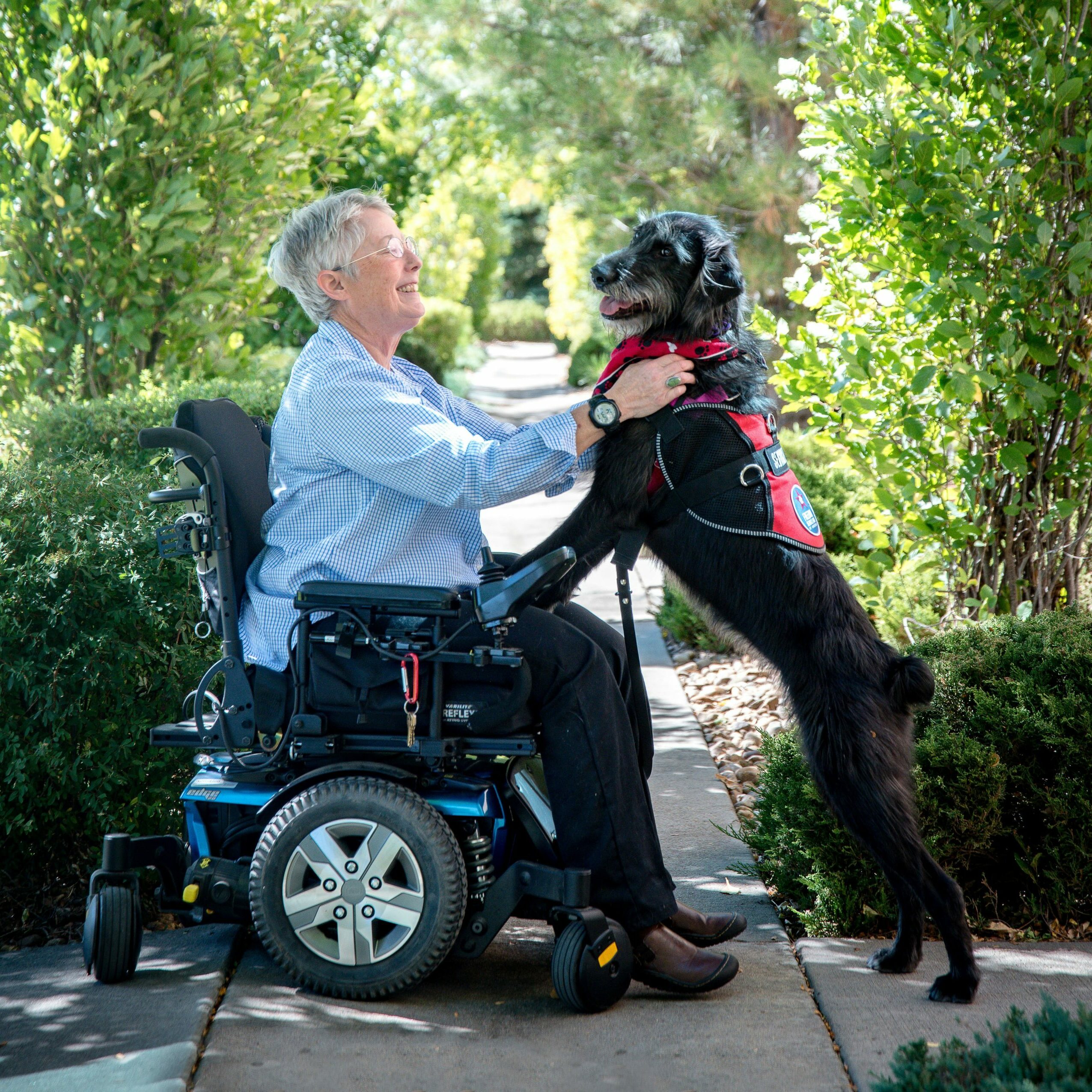
Today, Artie is in a wheelchair living with multiple sclerosis and the aftermath of his injuries that left him paralyzed. He is a veteran's activist and lobbies tirelessly for veterans rights. Recently, something changed his life. His service dog, Sierra. Through Operation Freedom, Artie is now the loyal client to Sierra who has become his arms and legs. Sierra retrieves objects that fall to the ground, opens handicap doors, finds his phone and performs other routine tasks. There’s something bigger though….Sierra is now by Artie’s side wherever he goes. When he lobbies at the Colorado State Capitol and in Washington, Sierra demonstrates the role his service dog plays in his life. The dog’s presence helps a veteran overcome the stress of being in a crowd of people. “When you go out with your service dog, you are a person with a cool dog. Not a person with a disability,” Artie says. “A service dog lets veterans be like everyone else.”
Gulf War Veteran, David W. & Summer
David is a Gulf War Veteran with many physical challenges as a result of his tour of duty. His spinal cord injuries and severe nerve damage inhibit his balance and his ability to walk. Increasingly, the back of his wife's wheelchair is what he would grasp in order to balance.
Not anymore. David recently got paired with Summer, his new service dog, through Operation Freedom. Summer has been with David for several months and already keeps him from falling, detects obstacles for him and even helps with the grocery shopping - although David says she always wants to go to the dog bone aisle first!
"Some days I can't move my legs, then Summer is my legs", said David. "She gives me freedom because I need to watch my wife to take care of her and not be behind her wheelchair. Now people talk to us about Summer and our disabilities, before they always talked behind our backs."
Ian N. & Clark
Medically Retired Army Staff Sergeant Ian Newland graduated with his service dog, Clark. Ian was injured in Iraq in December 2006, while his unit was patrolling an area in Adhamiyah in northeast Baghdad. As Ian and four other soldiers were riding in their Humvee, an insurgent threw a hand grenade in the vehicle. A 19-year-old gunner on board tried to deflect the grenade, but it fell inside the vehicle. The gunner used his body to shield the others from the deadly blast, and was killed instantly. The others soldiers survived. Ian, the most severely injured of the surviving soldiers, suffered a mild traumatic brain injury, shrapnel wounds to face, both arms, right hip, both legs and right knee. The injuries left him with severe mobility problems. Ian’s service dog, Clark, is trained to assist with Ian’s mobility and help him avoid falling, so Ian does not need to rely on a wheelchair or cane.
Ian now works in IT at a major real estate firm, while also attending school full-time. He is married and has two daughters. When asked how Clark has changed his life, Ian exclaimed, “Positively! I feel like I can do more of things I did before I was injured.”
|